Saturday, 24 November 2018

Dr. Babasaheb Ambedkar And Ashoka Dhamma Chakra.

Dr. Babasaheb Ambedkar and Ashoka Dhamma Chakra

Dr. Babasaheb Ambedkar was instrumental for incorporating the wheel of Dhamma chakra or Ashoka Chakra in Navy Blue in the National Flag of India. To select Flag for Independent India, on 23rd June 1947 the Constituent Assembly of India set up an Ad hoc committee headed by Rajendra Prasad with Dr. Babasaheb Ambedkar, Maulana Abul Kalam Azad, Sarojini, Rajagopalachari and K. M. Munshi as its members. On 22 July 1947, the present form (Four Colours Viz., Saffron, White, Green and Navy Blue Chakra) of the National Flag of India was adopted by the Constituent Assembly. The spinning wheel of the Congress Flag was replaced by the Chakra (Wheel) from the Lion Capital of Ashoka at its centre.

As a Member of Ad hoc committee on the National Flag Dr. Babasaheb Ambedkar later explained, "Even though Buddhism is almost extinct in India, yet it has given birth to a culture, which is far better and richer than the Brahminic culture. When the question of the national flag and the national emblem was being considered by the Constituent Assembly we could not find any suitable symbol from the Brahminic culture. Ultimately, the Buddhist culture came to our rescue and we accepted the Wheel of Law (Dhamma-Chakra) as the national symbol."

Ambeth,
Dharmapuri,
Tamil Nadu.

Jai Bheem...!!!

Also Read:
* Unknown Facts about "Founding Father Of Modern India" -- Revolutionary Dr. Babasaheb Ambedkar.

Thursday, 22 November 2018

Buddhism In Dharmapuri And Salem District of Tamil Nadu.


Buddha statue in Dharmapuri Archaeological Museum


Dharmapuri / Dhammapuri:
'Dharmapuri' was called once "Dhamma + Puri" i,e Town of Dhamma. It was a noted centre of Buddhism activities. The rulers Adhiyamans might be the Buddhists. The decline of Buddhism in South India continued up to 16th Century. They were killed by the force of Bhramanism. Later Buddhism fade away from Salem and Dharmapuri of Tamil Nadu. Today we can find, there are beautiful and big, about two metres high, sculptures of seated Buddha, carved in stone noticed at Deganur in Dharmapuri district.


Buddha statue in Dharmapuri Archaeological Museum
Headless sculpture of seated Buddha statue in Dharmapuri Archaeological Museum. It was founded during the explorations conducted near Kadakathur village of Dharmapuri district.

Salem / Seelam:
‘Salem’ gets its name from "Seelam" which is the Paali language. Asokan inscription mentioned it as "Sathyaputhra". There are so many places identified it. Few places like 'Thammampatti' near to Salem was "Dhammapatti" once and 'Thiyaganur' village which mean "Thiyanam (meditation) oor". These places are presence of early Buddhist elements. 


Buddha Statue in Thiyaganur Village of Salem district

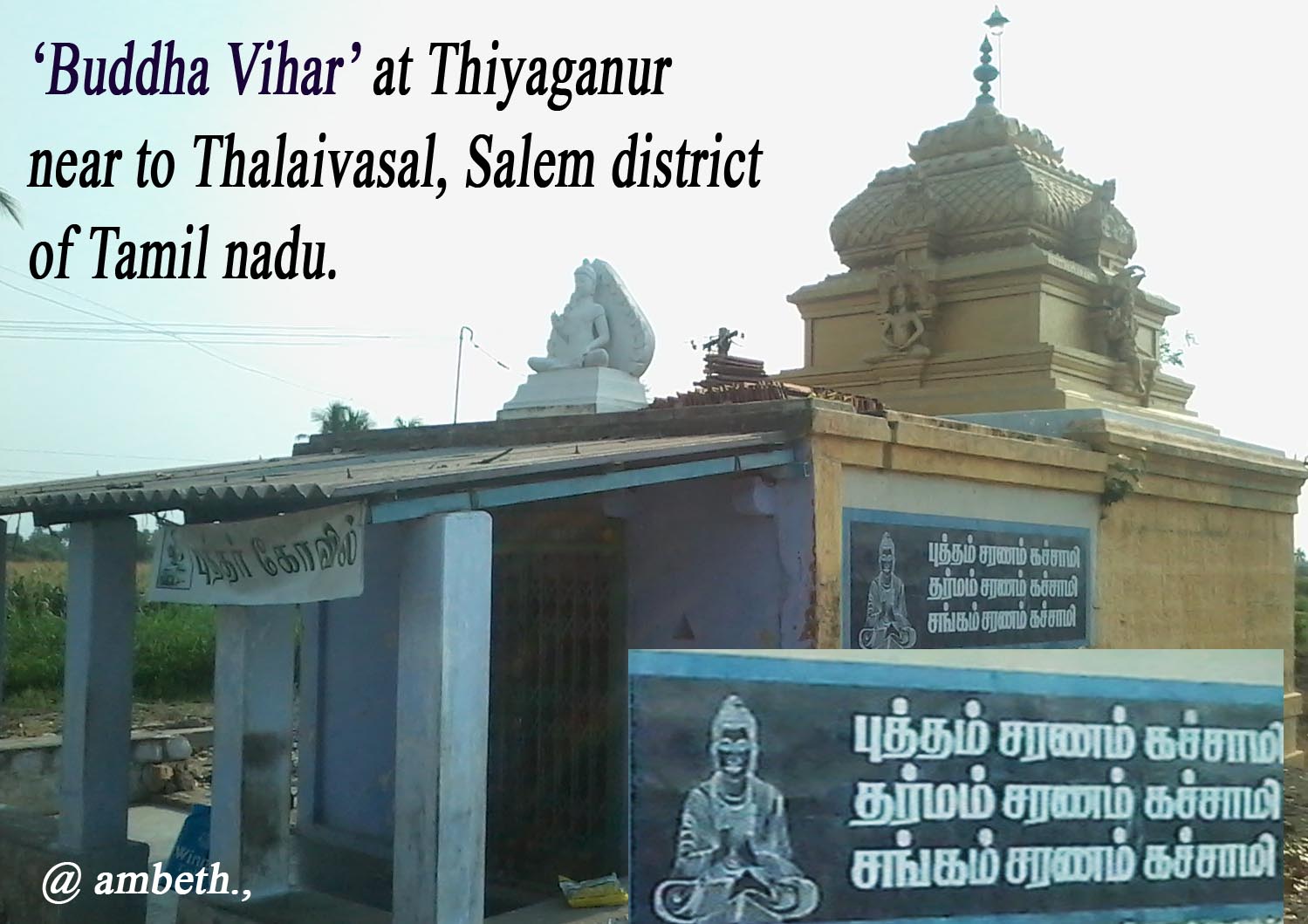
The historical importance of the village Thiyaganur comes from the presence of two Buddha statues. One statue is under worship and a Vihar was built in 2013. Dhyana Mandapam (Meditation center) was opened in June, 2013 by Maharabushnam, the then Salem district Collector.


Buddha Vihar in Thiyaganur Village of Salem district


Regards,
Ambeth,
Dharmapuri,
Tamil Nadu.

Jai Bheem...!!

Reference:
* 'A Social History of India' By S. N. Sadasivan.

Also Read:
* Buddhist Works in Tamil Literary and Buddhist Teachers / Scholars of Tamil Nadu.

Valluvar's World Famous 'Thirukural / Tirikural' And Pandit Iyothee Thass.

Valluvar's 'Thirukural' and Pandit Iyothee Thass

World Famous Thirukural (Tirikural) was written by Valluvar in Tamil. It was printed and published for the first time by European Civil Servant ' Francis Whyte Ellis' who loved the Tamil Language. He used to collect palm leaves and printed. Ellis collected palm leaves from Kandappan a butler of another European Civil Servant George Harrington. Kandappan was the grand father of Pandit Iyothee Thass. ( Note : Pandit Iyothee Thass was the Pioneer to E.V. Ramasamy Periyar and Dr. Babasaheb Ambedkar. Pandit Iyothee Thass who founded the Sakya Indian Buddhist Society in Chennai).

Later Tirikural was edited by Muthusamy and corrected by Thandavaraya. When it was released from the press Kandappan was taken aback because four new verses had been added to the original Tiruvalluvar Malai. This was published in 1831 and then reprinted in 1834. Again in 1835, Vishakperumal brought out the 3rd edition of Tirikural with Tiruvalluvar Malai. In 1837, a new edition by Saravana Perumal ( brother of Visaka Perumal ). When Iyothee Thass compared the edition of Ellis with editions of Vishakaperumal and Saravana Perumal, he found a newly added story in the Vishakaperumal's edition of Tiruvalluvar Malai, that Valluvar was born to Brahmin father and Pariah mother. This tale was not found a place in Ellis edition.

Iyothee Thass wrote at length on Buddhism, the life of Buddha, his readings, the dialogues he had with his disciples, and on the principles of faith and action which he upheld. He argued that the text, Thirukural was originally known as Tiri-kural (Tiri means three) and it was the first Buddhist Text in a Dravidian Language. According to him, Valluvar belonged to 'Sakyan' clan who were called the best astrologer and expert doctors of medicines. They present in Mylapore, Chennai was once the abode of Valluvas and for this there are evidences of inscriptions and Copper plates. The Kural content adhered to the three Pitakas of the Buddha's Teachings and hence it was known as the Thirukural.

Reference: 
* “Pandit Iyothee Thass” by T. Nalini Anbarasu. [NCBH Publication]

Also Read:
* 'Pandit Iyothee Thass'.
* Pandit Iyothee Thass and M. Singaravelu ( Founding Father of the Communist Party of India in Tamil Nadu).

Jai bheem...!!!

Saturday, 27 October 2018

Buddhist Works In Tamil Literary And Buddhist Teachers / Scholars of Tamil Nadu.

Buddhist Works in Tamil and Buddhist Teachers/Scholars of Tamil Nadu 


Buddhist Works in Tamil Literary:


* Manimekalai: One of the five great classic epics in the Tamil Language written by Sithalai Sattanar in 2nd Century A.D.

* Kundalakesi: One of the five great classic epics in the Tamil Language written by Nadaguttanar in 4th Century A.D.

* Valaiyapathy: One of the five great classic epics in the Tamil Language.

* Virasoliyam: The Tamil work on grammar was written by Buddhamitra in 11th century A.D.

* Siddhantattogai.

* Tiruppadigam.

* Vimbasara Kathai.


Buddhist Teachers/Scholars of Tamil Nadu:

                               
1. Ilam Bodhiyar: Several of his verses are found in the ‘Naṭṭrinai’. (1st or 2nd Century A.D)

2. Sangavarunar: 1st or 2nd Century A.D.

3. Aravana Adigal: He was the head of a Vihara in Puhar or Kaveripattinam. (2nd Century A.D)

4. Bhikkhuni Manimekalai.

5. Sithalai Sattanar: The author of the Tamil classic epic ‘Maṇimekalai’. (2nd Century A.D)

6. Sanghamitra: A Bhikkhu lived in the 3rd Century A.D.

7. Nadaguttanar: The author of the Tamil classic epic ‘Kuṇḍalakesi’. (4th Century A.D)

8. Buddhadatta: He wrote ‘Madhuratthavilasini’ is a Pali commentary to the Buddhavamsa of the Sutta Piṭaka. He wrote the renowned treatise on Abhidhamma, Abhidhammavatara. He is also the author of the Pali work on the Vinaya called Vinayavinicchaya. (5th Century A.D)

9. Bodhidhamma: The founder of the ‘Dhyana-marga’. It was called ‘Chan’ by the Chinese and ‘Zen’ by the Japanese. (6th Century A.D)

10. Dignaga: A philosopher and a debater of great repute. He was the founder of the Indian Logic (Vinnaṇavada). (5th Century A.D)

11. Dhammapala of Nalanda: He was the Vice-Chancellor of the Nalanda University. Native of Kachi.

12. Badaratirtha Dhammapala: 6th Century A.D.

13. Buddha Nandi and Sariputra: 7th Century A.D.

14. Vajrabodhi (661-730 A.D): An adherent of the Vajrayana School.

15. Bodhiruci: One of the greatest translators of Buddhist texts. (7th Century A.D)

16. Buddhamitra: Composed the ‘Virasoliyam: The Tamil work on grammar’ was written by him in 11th century A.D.

17. Perundevanar: He was the student of Buddhamitra. He wrote a commentary on the ‘Virasoliyam’ in 11th century A.D.

18. Kavirajaraja: 12th century A.D.

19. Buddhappiya: His book of the Pali verses in praise of the Buddha is called Pajjamadhu (Nectar of Verses). It is a standing monument to his excellence as a poet and his deep love for the Buddha. (12th century A.D)

20. Mahakasyapa: Among his works are the commentary on the Abhidhamma, works called Mohavicchedani, the commentary to the Vinaya Piṭaka, Vimativinodani, and the Anagatavaṃsa. (12th century A.D)

21. Anuruddha: His most famous work is a manual of Abhidhamma, the Abhidhammatthasangaha, which has served as an introduction to the Abhidhamma philosophy.  (12th century A.D)

22. Dhammakirti: He organised an International conference of Buddhists under the patronage of Parakrama Bahu II. (13th century A.D).

Compiled:
Ambeth,
Dharmapuri,
Tamil Nadu.

Source:
1. ‘Boudhamum Tamilum’ by Mayilai Seeni Venkatasamy (1940).
2. 'Story of Buddhism, with special reference to South India’ by Government Museum, Chennai. Page- 29, 30, 31, 53, 54, 148, 149.

Tuesday, 16 October 2018

Part of My Article About Dr. Babasaheb Ambedkar In Tamil Nadu Text Book (9th Standard Social Science Book).

Part of my article about Dr. Babasaheb Ambedkar in Tamil Nadu Text Book
(9th Standard Social Science Book)

It's my pleasure and very proud to share it. Thanks to 'SCERT' and 'Tamil Nadu Textbook and Educational Services Corporation' (Department Of School Education) for added some parts of my article "Saviour of Labours Rights in India -- Revolutionary Dr. Babasaheb Ambedkar. Broaden Your Knowledge" in 9th standard Social Science Book (Term - II, Volume 4) under 'Civics - Unit-1: Human Rights'. I feel this is my great respect to Dr. Babasaheb Ambedkar and shut the mouths of half-baked fellows who always keep shouting against him and branded him as a leader of some section.


Various Medium and Page Number:

Tamil Medium: Page - 127, 130.
English Medium: Page - 112, 115.
Telugu Medium: Page - 126, 129.
Kannada Medium: Page - 124, 127.
Malayalam Medium: Not yet Published.
Urudu Medium: Not yet Published.

First Print: 2018.

Regards,
Ambeth,
Dharmapuri,
Tamil Nadu.

Jai bheem..!

Tuesday, 7 August 2018

Lagging Behind The Representation of Scheduled Castes, Scheduled Tribes and OBCs As On January 1st, 2016.

Among staff in Central government ministries and departments, the composition of SCs / STs and OBCs staff is mandated to be at least 15%, 7.5%, and 27%. However, this representation is not fulfilled in several departments, 2016 data from the Department of Personnel and training shows with the biggest lags.


Ministry /Department


SC (15% mandate)
Space

11.66
Personnel and Training

12.25
Drinking water and Sanitation

12.36
Cabinet Secretariat

12.70
Ayush

12.87


Ministry /Department


ST (7.5% mandate)

Investment and Public Asset
Management

1.96

Vice-President’s Secretariat
2.04

Cabinet Secretariat
2.28

Social Justice and Empowerment
2.85

Panchayati Raj
2.99


Ministry /Department


OBC (27% mandate)

Agricultural Research and Education


2.78

Food Processing Industries


3.12

Land Resources


5.33

Science and Technology


5.71

Coal


5.86

Reference: Lok Sabha Question Hour dated on March 28th, 2018.

Saturday, 19 August 2017

Tamil Quotes of Revolutionary Dr. Babasaheb Ambedkar on Women:

India's first National Level Scheduled Class Woman Leader - Annai Meenambal.

1. "பெண்கள் அடைந்திருக்கும் முன்னேற்ற அளவை வைத்துதான் ஒரு சமுதாயத்தின் முன்னேற்றத்தை நான் அளவிடுகிரேன்".

“I measure the progress of the society by the degree of progress which women have achieved.”

2.  "பெண்கள் அமைப்பில் மிகுந்த நம்பிக்கையுடையவன் நான். அவர்களை மனம் ஒப்ப செய்துவிட்டால், சமுகத்தின் நிலையை உயர்த்திட அவர்களால் என்ன செய்யமுடியும் என்பது என்னக்கு தெரியும். சமுக அவலங்களை ஒழிப்பதில் அவர்கள் மிகபெரும் சேவை செய்திருகிறார்கள். எனது சொந்த அனுபவத்திலிருந்தே அதை நான் நிரூபிப்பேன். பட்டியலின மக்களிடையே நான் பணியாற்ற ஆரம்பித்த காலத்திலிருந்தே ஆண்களோடு பெண்களையும் உடன் இட்டு செல்லும் பழக்கத்தை மேற்கொண்டேன்".

"I am a great believer in women’s organization. I know that what they can do to improve the condition of the society if they are convinced. In the eradication of social evils they have rendered great services. I will testify to that from my own experience. Ever since I began too work among the depressed classes, I made it a point to carry women along with men."

3. "குழந்தைப் பேறு சமயத்தில் பெண்கள் பட வேண்டியுள்ள வேதனைகளை ஆண்கள் பட வேண்டியிருந்தால் அவர்களில் யாரும் வாழ்நாளில் ஒரு முறைக்குமேல் குழந்தை பெற இணங்க மாட்டார்கள்."

"If men have to bear pain like the pain of mother while in the prenatal condition and child birth, none of them who begets a child will comply another time in their life".

4. "பெண்கள் விடுதலை என்பது மானுட விடுதலையாகும்".

"Women liberation is the human liberation".

5. "ஒரு ஆண் கல்வியைப் பெற்றால், அவரது குடும்பத்தில் அவர் மட்டுமே படித்தவராக இருப்பார். ஒருவேளை ஒரு பெண் படித்திருந்தால், முழு குடும்பமும் பயனடைந்திருக்கும்."

"If a boy gets education, he is the only person to get educated in a family. Perhaps, if a girl is educated in a family, the whole family is benefited."


Friday, 14 October 2016

October 14th: Dhamma Chakka Pavattan Day (Mass Reversion To Buddhism)

Buddha, Pandit Iyothee Thass, Dr. Babasaheb Ambedkar


Today is one of the greatest historical days in India. With remembering Revolutionary Dr. Babasaheb Ambedkar's Pioneer Pandit Iyothee Thass, I wishing you all happy Dhamma Chakka Pavattan (Mass Reversion Day). Pandit Iyothee Thass was the first Person who had worked for the cause of revivalism of Buddhism in Modern India. He was the first person who instrumental in articulating the idea that the Scheduled Classes were not only Buddhists formerly but were the original inhabitants of India which later paved way for many social movements. In 1886, he declared that the Scheduled Classes were not Hindus. He founded the Sakya Indian Buddhist Society in Chennai in 1890s. 

On 14th October 1956, Babasaheb along with more than half million re-enter (not a conversion) to our Buddhism in Nagpur. Buddhism is a morality teachings of Buddha based on Dhamma i.e., Truth, a way of life. Buddha didn't promise to give salvation. He said he was a way finder and not giver of salvation. This Re-enter to Buddhism paved and initiated the original born of Buddhism in India. According to Babasaheb, we the people were ancient Buddhist and the history of India was nothing but the mortal conflict between the Brahmanism and Buddhism. Those who didn't accept the Brahmanism were later called as Untouchables. But the historical pages are completely molded and making humbug. Unfortunately the people of today and our leaders from both North and South India in his age could not understand the reality of his path. They were duped and so they refused to follow him. At this juncture, if the Scheduled Classes re-enter into our Buddhism, Today the turn of Indian history would be in different line. But majority are still under the label platform of hindutuva and with sufferings in South and North India. We were never Hindus, We are not Hindus and We will never a part of Hindus. 

It is impossible to create the sound without hitting hands together. Likewise it is not possible for Revolutionary Ambedkar's movement without taking Buddha. Already we have Buddha and Babasaheb in India. So we needn't to create a new ideology. Our Babasaheb achieved the rights for not only some particular section but also for the whole oppressed and margin in the society by socially and economically backward in India. It happened because of his well verses in Education. I am sure that Education especially women's education with Buddha and Babasaheb path will help us. So, Educate at first with broad mind and help all margins. That's why he put Educate as first in his great quote, "Educate, Agitate and Organize".

With Regards,
Ambeth,
Dharmapuri,
Tamil Nadu.

14/10/2012.


Jai bheem...!
Long Live Ambedkarism...!


Buddhist Flag and Meaning


22 vows given by Babasaheb in Nagpur on 14th October 1956:


1. I shall have no faith in Brahma, Vishnu and Maheshwara, nor shall I worship them.
2. I shall have no faith in Rama and Krishna, who are believed to be incarnation of God, nor shall I worship them.
3. I shall have no faith in Gauri, Ganapati and other gods and goddesses of Hindus, nor shall I worship them.
4. I do not believe in the incarnation of God.
5. I do not and shall not believe that Lord Buddha was the incarnation of Vishnu. I believe this to be sheer madness and false propaganda.
6. I shall not perform Shraddha nor shall I give pind.
7. I shall not act in a manner violating the principles and teachings of the Buddha.
8. I shall not allow any ceremonies to be performed by Brahmins.
9. I shall believe in the equality of man.
10. I shall endeavour to establish equality.
11. I shall follow the Noble Eightfold Path of the Buddha.
12. I shall follow the ten paramitas prescribed by the Buddha.
13. I shall have compassion and loving-kindness for all living beings and protect them.
14. I shall not steal.
15. I shall not tell lies.
16. I shall not commit carnal sins.
17. I shall not take intoxicants like liquor, drugs, etc.
18. I shall endeavour to follow the Noble Eightfold Path and practice compassion and loving-kindness in everyday life.
19. I renounce Hinduism, which disfavors humanity and impedes the advancement and development of humanity because it is based on inequality, and adopt Buddhism as my religion.
20. I firmly believe the Dhamma of the Buddha is the only true religion.
21. I consider that I have taken a new birth.
22. I solemnly declare and affirm that I shall hereafter lead my life according to the teachings of Buddha's Dhamma.